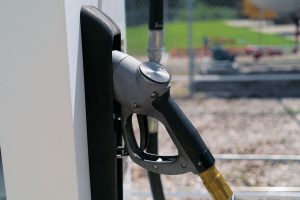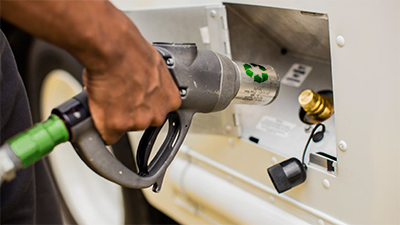

For fleet managers who want the best of all worlds, ROUSH CleanTech presents the 2014 – 2016 Ford F-250 pickup truck powered by propane autogas. The ROUSH CleanTech fuel system offers lower emissions and fuel costs without sacrificing performance or ease of ownership.
Ford F-250
How to Order
Retrofit a Truck You Already Own
Fuel systems are available for 2012 – 2016 model year Ford F-250 pickup trucks equipped with the 6.2-liter V8 engine. These systems can be installed at any one of our ROUSH CleanTech authorized installation centers.
For ordering information and price, please call 800.59.ROUSH or contact one of our authorized dealers.
Benefits
Operating Costs: Reduced
Switching to propane autogas not only benefits the environment, it also improves fleet operators’ bottom line. Fleet managers are discovering they can lower their fuel costs by 30 to 40 percent compared to gasoline, with less maintenance costs over time, by switching to propane autogas. Visit the Savings Calculator to see how much money you can save.
Emissions: Reduced
Propane autogas burns far cleaner than gasoline, with less harmful emissions:
- Up to 20 percent less nitrogen oxide
- Up to 60 percent less carbon monoxide
- Up to 24 percent fewer greenhouse gas emissions
- Fewer particulate emissions
Visit our Propane Page for more details on environmental benefits.
Performance: Identical
A Ford F-250 equipped with the ROUSH CleanTech propane autogas fuel system delivers the same horsepower, torque and towing capacity of a gasoline-powered Ford F-250 with a 6.2-liter V8 engine: 385 horsepower and 405 lb-ft of torque. Whether you are in extreme cold or extreme heat, high or low altitude, or any inclement weather condition, your propane autogas truck will start and operate consistently and reliably.
Warranty: Identical
ROUSH CleanTech maintains the factory Ford 5-year / 60,000 mile limited powertrain warranty on vehicles equipped with the liquid propane autogas system. The ROUSH CleanTech propane autogas fuel system is covered by a limited 1-year / 12,000 mile warranty when installed on a truck that is no longer covered by the Ford factory warranty.
Serviceability: Identical
The ROUSH CleanTech liquid propane autogas fuel system can be serviced using standard Ford diagnostic equipment, and service centers are being set up all around the country. Visit the Dealer Locator to locate a service center near you, or call 800.59.ROUSH.
“Greening” Your Fleet
A number of government agencies and private companies have committed to sustainable strategies to reduce their emissions and carbon footprint. Fueling with propane autogas allows your company to have a measurable positive impact on the environment, have corporate stewardship, and earn customer loyalty in the process. And with 90 percent of U.S. propane supplies produced here, you’ll be doing your part to help reduce our country’s dependence on imported oil.
System Overview
Switching to an alternative fuel doesn’t have to mean complexity. While a lot of engineering and development go into the design of the system, the components are all designed to fit within the same mounting points of the gasoline system found on the original vehicle. The system can be broken down into a few primary assemblies:
Fuel Rail Assembly
-
Fuel Rail
- Fuel Injectors
- Injection Pressure / Temperature Sensor
Fuel Line Assembly
-
Fuel Lines
- Flow Control Solenoid
Fuel Tank Assembly
-
Fuel Tank
- Fuel Pump
- Fuel Level Sensor
Recalibration of Ford Powertrain Control System
-
Calibration
- Wiring Harness
Special Note about Cylinder Heads:
Ford has developed an alternative fuel prep engine package for the Ford F-250 and F-350 vehicles. Hardened valve seats can be added at time of vehicle order to the 6.2L V8 engine.
For more information on propane autogas fuel system engineering, visit our Fuel System Technology page.
Technical Specifications
General
| Model Year: | 2012 – NEWER |
|---|---|
| Engine Size: | 6.2L V8 |
| Drivetrain: | 4×2 or 4×4 |
| Transmission: | 6-Speed Automatic |
| Rear Axle: | All applications |
| Cab Configurations: | All cab configurations |
| Bed Configurations: | Pickup beds Bed delete Chassis cab (in-bed tank only) |
| Trailer Tow Package: | Mandatory |
| Trim: | All applications |
| GVWR: | Up to 14,000 lbs |
Measurements*
| Length: | 227.6″ |
|---|---|
| Width: | 104.9″ (with mirrors) |
| Height: | 79.2″ |
| Weight: | 13,300 lbs (GVWR) |
| Wheelbase: | 137.0″ |
| Passenger Capacity: | 2 to 5 |
* = Measurements reflect Regular Cab equipped with an 8′ bed. Also available on Super Cab, Crew Cab, and 6.75′ bed. See http://commtruck.ford.com for additional measurements.
Compliance
| FMVSS: | Yes |
|---|---|
| NHTSA: | Yes |
| EPA: | Yes Download 2012 Certificate Here Download 2014 Certificate Here Download 2015 Certificate Here |
| CARB: | 2015 MY only Download 2015 Certificate Here |
In-Bed Tank
| Gallon Capacity (usable): | 38 |
|---|---|
| Dimensions: | Depth: 25.5 in. Width: 46.8 in. Height: 22.3 in. |
| Wet Weight Differential: | 28 gal. gasoline tank: 278 lbs. increase 35 gal. gasoline tank: 228 lbs. increase 40 gal. gasoline tank: 192 lbs. increase |
The propane autogas under-bed fuel system modifies the Gross Combined Weight Rating (GCWR) available with the under-bed propane autogas fuel system. The limit for this vehicle and fuel system is 14,000 pounds. This means that the total weight, which includes curb weight, passengers, payload and trailer, cannot exceed 14,000 pounds. For example, the highest curb weight on an F-250 / F-350 is 7,457 pounds. If you assume 200 pounds for passengers, you still have 6,700 pounds of total payload and trailer weight available.
Parts Included In System
- Stainless steel fuel lines
- Fuel rail assembly
- Fuel injectors
- Fuel tank
- Recalibrated PCM (Powertrain Control Module)
Other Information
| Warranty: | ROUSH CleanTech Service Section |
|---|---|
| Installation Instructions: | ROUSH CleanTech Service Section |